
Life as an open-ended inquiry
1. Spring and Autumn at the Same Time
It is the first time that I want to explore springtime in relation to autumn, and to see the Earth like a whole body that is having spring and autumn at the same time, and how necessary that is.
Spring carries the quality of growth.
But growth also requires death.
Seeds cannot emerge without dissolution.
Life cannot appear without transformation.
After many years inside the collective healing movement, I see more clearly that healing is truly collective. Whether we know it or not, we are all participating in the dissolution of old structures. Something is collapsing very rapidly.
2. The Hospicing of Spiritual Authority
Yesterday I witnessed something very important.
There was an integrating gathering hosted by Gabor Mate within the Science and Nonduality initiative. On the panel were Pat McCabe, Bayo Akomolafe, Tara Brach, V, and Mathew Remski.
The conversation was about the structure of secrecy in spiritual culture. It was a painful and graceful hospicing of the patriarchal model of spirituality.
Stories emerged about guru worship, about how we have looked up to male figures to guide and protect us, to become father figures for our spiritual lives.
But these structures are collapsing and yesterday the collapse of secrecy and silence made a great noise!
Each person on that panel laid down authority voluntarily.
3. Returning Authority to the Earth
What emerged in the discussion is a call for horizontal intelligence.
Not one leader.
Not one teacher.
But collective intelligence.
Authority, guidance, and medicine returning to the Earth and to the more-than-human world.
True spirituality is not above us. It lives in the mountains. In the river. In the forest. In the body.
For centuries we believed that meditation and guidance from spiritual teachers were the highest path.
But in many ways this also contributed to our alienation from the Earth.
Now we feel the longing for ceremony, structures where humans can gather and honour the living world together.
4. The Winter of Dissolution
What makes spring possible is the storing capacity of winter.
In winter everything dissolves.
But dissolution is also distillation. The essence gathers.
Seeds are prepared in the soil and in the trees.
When spring arrives, the seeds are already ready.
They explode into life, carried by wind, birds, and water.
Biodiversity erupts in celebration.
5. The Earth’s Chrysalis
Perhaps the Earth herself is in a chrysalis phase.
The destructive forces we call patriarchy, colonialism, genocide, and ecocide may also be part of a deeper planetary transformation.
This is very difficult to accept.
The suffering is immense.
But if we imagine Earth as a vast living body, perhaps something within that body entered a destructive phase, like cancer.
Cancer, too, has a role: it forces transformation. What we know for sure is that everything on the planet was thriving, migratory, evolving, until there was desertification. That created the Abrahamic desert religions for humans. For the first time in human evolution, nature was not worshipped, seen, or respected, and ownership led to the destruction of the earth. Ownership and violence became normalised, even idealised. Gabor Mate calls this 5 minutes out of the hour of Earth’s story, but I believe it is seconds. Now that the veil is lifting, we are becoming aware of the endless wonder of biocultural diversity, which worships all species and aspects of life, all elements as sacred.
6. The Caterpillar and the Imaginal Cells
The caterpillar-chrysalis-butterfly model described in the Animas Valley Institute and the work of Bill Plotkin offers a powerful image.
Inside the chrysalis the caterpillar does not simply grow wings.
It dissolves.
Its tissues break down into a kind of living soup.
But inside this soup are imaginal cells.
These cells carry the blueprint of the butterfly. During a caterpillar’s life, the caterpillar’s immune system attacks them. They are threatening, foreign.
But in the soup, they recognise each other. They begin to cluster. They have to gather and work together.
Structures begin to form. Wings. Eyes. Antennae. And finally, the butterfly emerges.
7. Imaginal Cells in Human Culture
Perhaps something similar is happening among humans.
Old systems are dissolving:
Patriarchy
Colonial domination
Industrial extraction
Guru authority
The myth of human supremacy
These systems still exist, but their legitimacy is fading. The spell is breaking. This is the dissolution of caterpillar tissue.
8. The Soup Phase
During metamorphosis everything becomes disorganized.
Inside the chrysalis there is no caterpillar anymore, but there is not yet a butterfly.
Many people today feel exactly this:
Institutions are failing.
Climate instability increases.
Cultural confusion grows.
Identity itself feels unstable.
We are in the soup phase.
9. Imaginal Networks
Across the world small groups are experimenting with new forms of life:
Regenerative agriculture
Indigenous resurgence
Ecological restoration
Relational spirituality
Distributed leadership
10. Recognising Each Other
Imaginal cells do not work alone.
They recognise each other.
Connection changes everything.
When enough imaginal cells connect, the pattern shifts.
Something similar may now be happening among humans learning to live relationally with the Earth again.
11. Examples of Imaginal Cells
Recently I witnessed eight people on a panel laying down spiritual authority voluntarily.
The film The Eternal Song carries a similar vision, without anyone claiming ownership or authority.
In Norway I discovered Naturfolk, and the Sámi woman Lona, whose humility is so deep she does not even place her name forward.
These are imaginal gestures.
But imaginal cells must show up, otherwise we cannot find each other.
12. The Signal Fire
We carry the flame of recognition, but we are still isolated. It is the dissolution of violence that makes kindness shine.
13. Beyond Hope
We have moved beyond hope, urgency, and courage.
Now we must connect again with:
Wind
Water
Forest
The Sámi people are still struggling to protect their lands.
Many people still carry fear in their nervous systems from centuries of colonial violence.
Colonial systems created a powerful weapon:
shame about belonging to the Earth.
14. The Path of Rooted Visibility
When imaginal cells appear, two mistakes are possible.
Silence. Or confrontation without support.
The deeper path is rooted visibility.
Not loud rebellion, but deep alliance with land and community.
The forest teaches this.
The tallest tree is not the strongest.
The strongest trees have intertwined roots.
15. Turning the Blade
In Norway, Lone Beate Ebeltoft discovered a remarkable strategy.
She used religious rights to protect sacred landscapes.
The same legal tool once used to colonise land becomes a shield to protect it.
Mountains, lakes, and rivers are recognised as sacred places.
This is metamorphosis inside the system itself.
16. Returning to Simple Gatherings
People need safe ways to reconnect with land.
Not dramatic spiritual performances. But simple gatherings.
Families.
Children.
Dogs.
Walking by the river.
Drumming.
Music.
Dancing.
Ordinary people remembering that the Earth is alive.
17. Learning from the Land
Some landscapes still carry strong living signatures.
Others are damaged and need healing.
Both matter.
Intact ecosystems teach us how relationship works.
Damaged ecosystems teach us how to repair it.
18. The Invitation
Many people feel the call to reconnect with the living Earth.
But they think they are alone.
The invitation is simple.
Come to the river.
Bring a drum, a guitar, your children, your dog, or simply yourself.
Walk.
Listen.
Sing.
Perhaps we are living in the chrysalis moment of our species.
If so, we may be imaginal cells learning to recognize each other.
19. Signs of Healthy Ecosystems
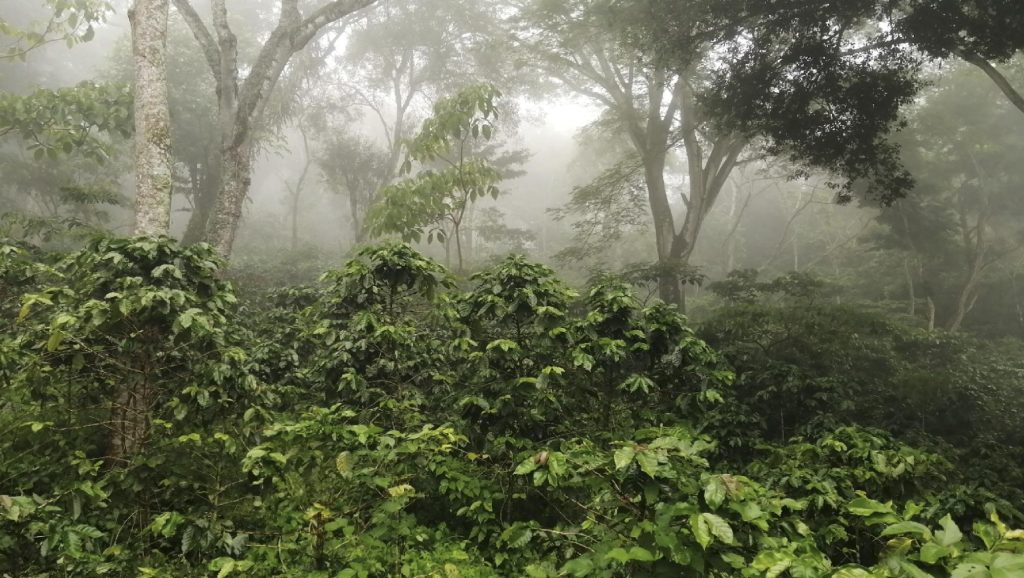
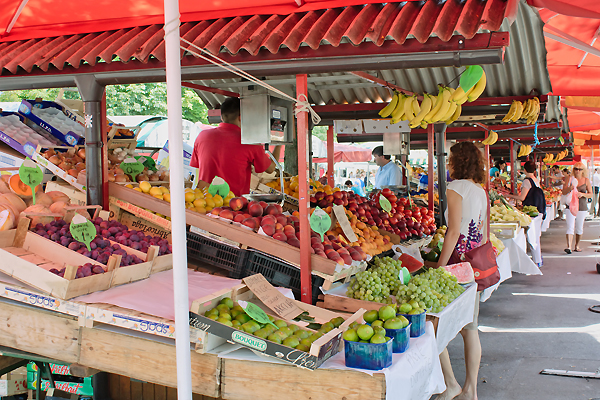
The imaginal cells are not only an idea.
In different parts of the Earth we can already see small signs of cultures learning again to live inside healthy ecosystems.
These places are not perfect.
But they show that another way of being human is possible.
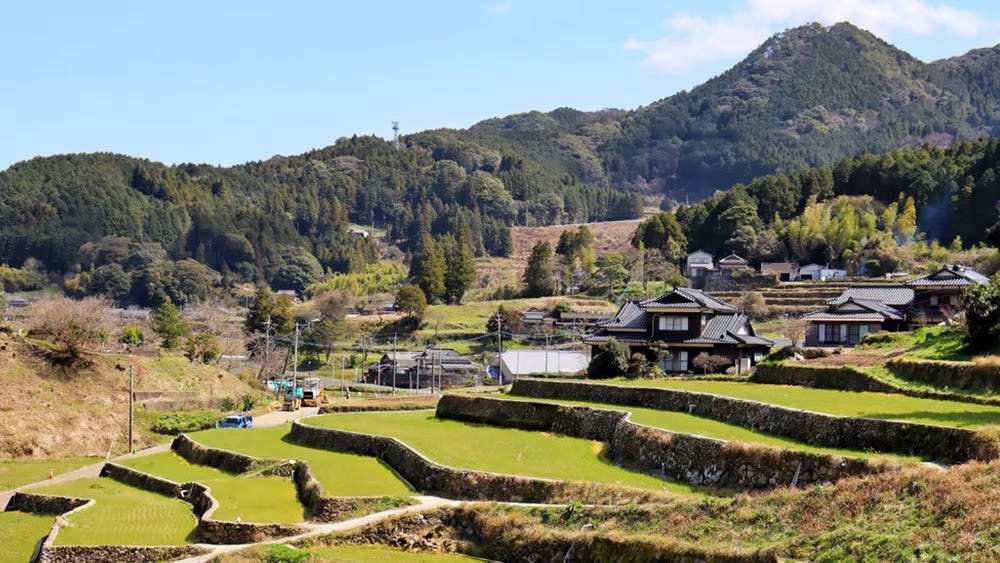
In some communities of the Atlantic Forest in South America, yerba mate is cultivated inside the living forest canopy. The forest is not cut down. Birds, insects, plants, and soil life remain part of a vibrant ecosystem. Human livelihood grows from cooperation with the forest rather than from its destruction.
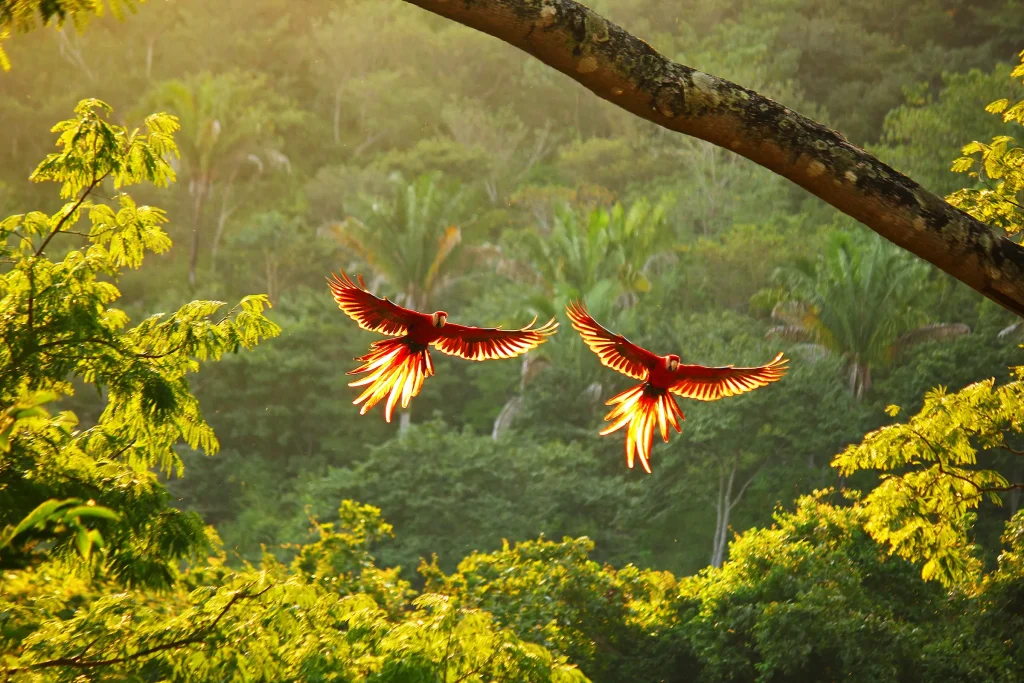
In parts of Costa Rica, forests that were once cleared have been allowed to regenerate. Wildlife has returned, rivers are recovering, and human prosperity increasingly comes from protecting biodiversity rather than replacing it.
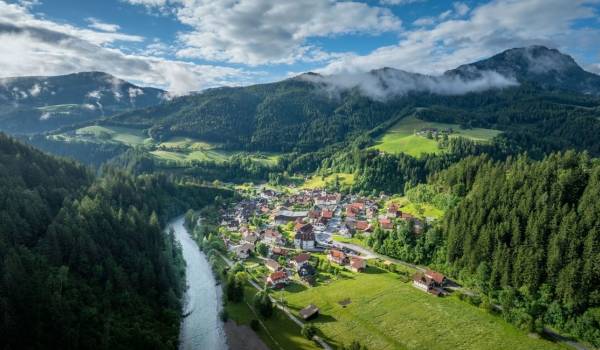
In countries such as Slovenia, large forest ecosystems are still woven together with village life, small farms, and local food cultures. People live close to forests that continue to shape their identity and economy.
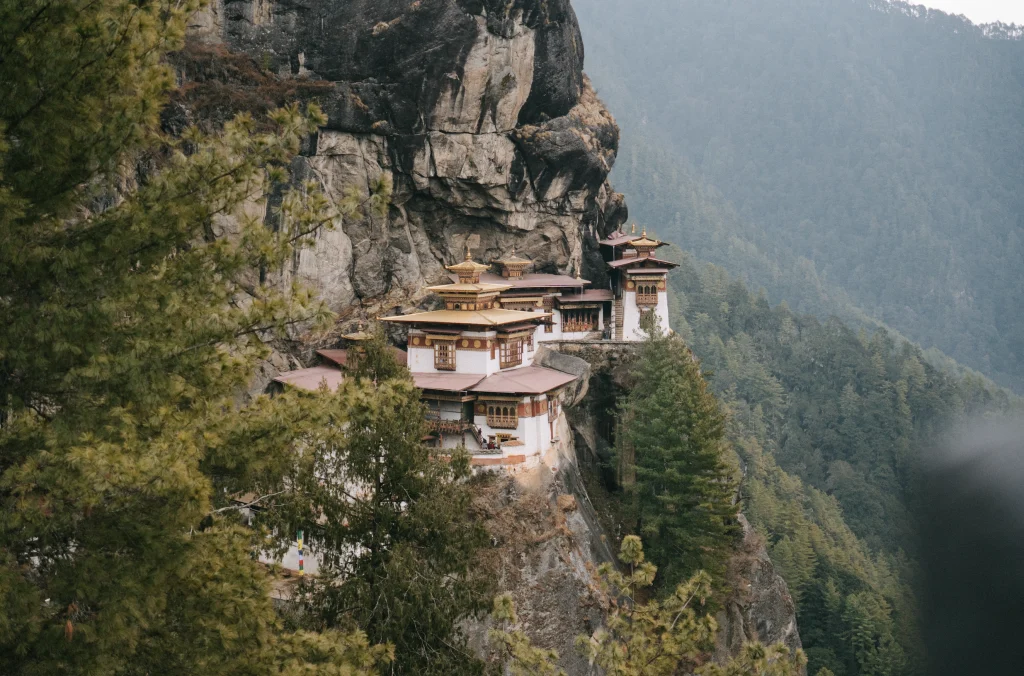
And in places like Bhutan, national policies recognise that the well-being of people cannot be separated from the well-being of forests, mountains, and rivers. Large areas of forest are protected, not only for resources, but as part of the living body of the country.
In these places we begin to glimpse what a healthy human culture might look like.
A culture where humans are not the only authorities.
Where guidance comes not only from human institutions, but from more-than-human elders:
old forests
ancient rivers
mountains that hold memory
animals who know how to live within the limits of the land.
In such ecosystems humans are not masters of the Earth.
We are participants in a council of life.
Our technologies, our art, our economies, and even our artificial intelligence can become tools that support the flourishing of this greater community.
Perhaps this is the next stage of human maturity.
The emergence of the all-beneficent human — a species capable of creativity, technology, prosperity, and culture, while strengthening the living systems that sustain all life.